Bringing a dog into your life is exciting, but caring for one involves much more than providing food and a place to sleep. Dogs need proper nutrition, exercise, mental stimulation, hygiene, preventive healthcare, safety, training, social interaction, and plenty of attention.
If you are a first-time dog owner, it can be difficult to know where to start. What should your dog eat? How often should they exercise? How much grooming do they need? What should you buy before bringing them home?
The good news is that caring for a dog becomes much easier when you understand the basics and establish a consistent routine.
This guide covers the essential aspects of dog care, from daily routines and feeding to grooming, health, safety, puppy care, and choosing the right products.
Quick Answer: What Does a Dog Need?
At a basic level, every dog needs:
- A nutritionally appropriate diet
- Fresh, clean water
- A safe and comfortable place to rest
- Regular physical activity
- Mental stimulation and play
- Appropriate grooming and hygiene
- Preventive veterinary care
- Vaccinations and parasite prevention as recommended by a veterinarian
- Training and socialization
- Attention, companionship, and a safe environment
However, the exact needs of a dog vary depending on factors such as age, size, breed characteristics, activity level, environment, and individual health.
What Does a Dog Need to Live a Healthy Life?
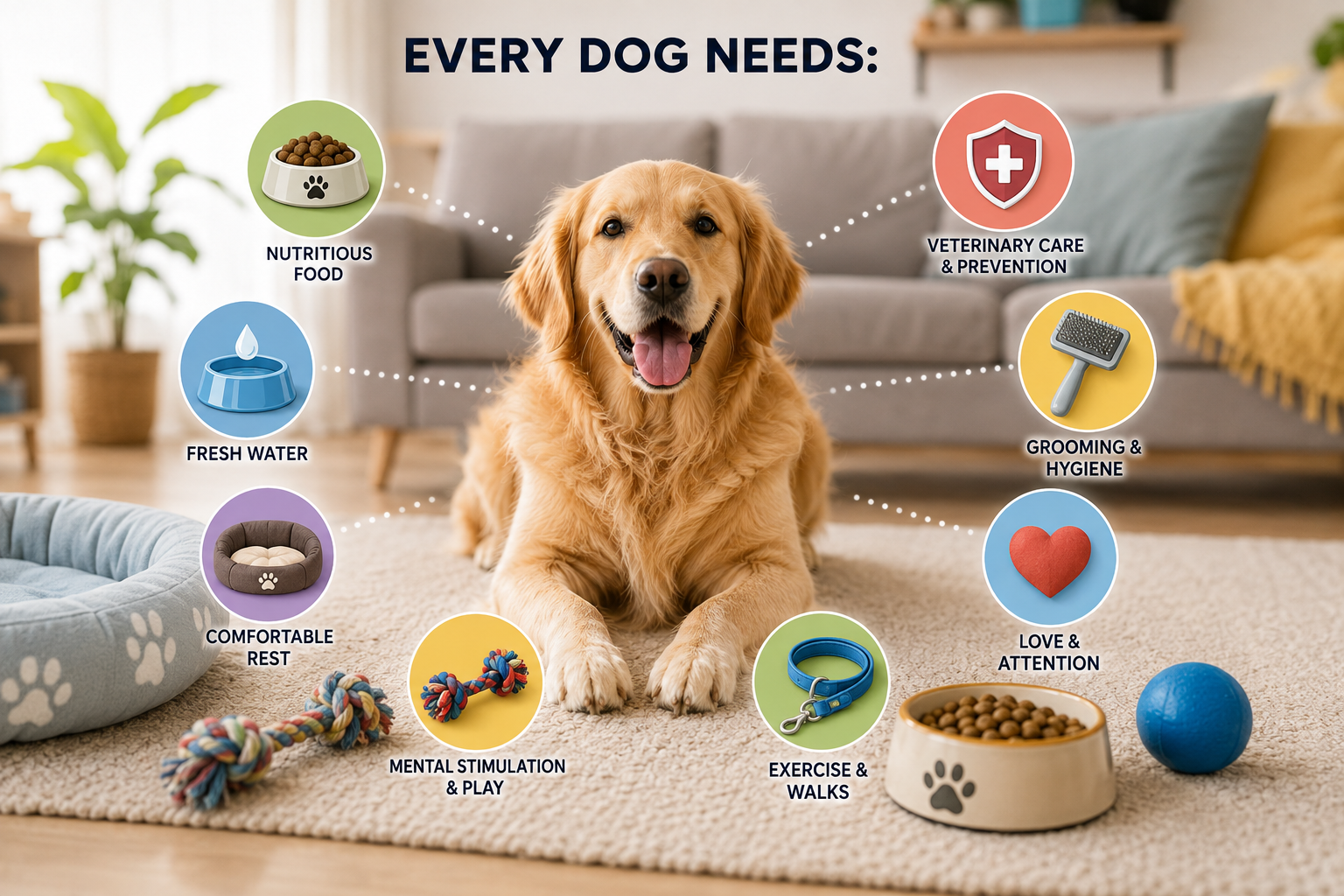
Good dog care is best understood as a combination of several areas rather than a single routine.
1. Proper Nutrition
Food is one of the foundations of your dog’s health. A dog’s nutritional needs change throughout life, so food should be appropriate for their life stage and individual circumstances.
Puppies, adult dogs, and senior dogs may have different nutritional requirements. Dogs with certain health conditions may also require specialized diets recommended by a veterinarian.
When choosing dog food, consider:
- Your dog’s age and life stage
- Size and activity level
- Individual health needs
- Nutritional adequacy
- Feeding recommendations from the manufacturer and your veterinarian
Avoid assuming that the most expensive food is automatically the best choice. The goal is to find an appropriate, nutritionally complete diet for your individual dog.
Related guide: [What Can Dogs Eat? Safe and Unsafe Foods for Dogs]
2. Fresh Water
Fresh water should always be available.
Keep your dog’s water bowl clean and check it regularly, especially during hot weather or after exercise. Some dogs drink more than others, but a noticeable change in drinking habits can sometimes indicate a health issue.
If your dog suddenly starts drinking substantially more or less than usual, talk to your veterinarian.
3. Exercise
Dogs need regular physical activity, but there is no universal exercise schedule that works for every dog.
A young, energetic dog may need considerably more activity than an older dog. Breed characteristics, physical condition, health, and individual personality also matter.
Exercise can include:
- Walks
- Play sessions
- Fetch
- Supervised outdoor activities
- Appropriate training games
- Other activities suited to your dog’s abilities
The objective is not simply to make your dog tired. Regular, appropriate activity supports physical health and can help prevent boredom.
4. Mental Stimulation
Physical exercise is only part of a healthy routine.
Dogs also need opportunities to use their senses and brains. Mental stimulation can include:
- Puzzle toys
- Training sessions
- Scent games
- Interactive play
- Food-dispensing toys
- Learning new commands
Even a short training session can provide meaningful mental stimulation.
5. Rest and Sleep
Rest is just as important as activity.
Dogs need a comfortable, quiet place where they can sleep without constant interruption. Puppies and senior dogs may require particularly large amounts of rest.
Avoid creating a routine in which your dog is constantly expected to play or interact. Learning to relax is also part of a healthy lifestyle.
How Do Dog Care Needs Change With Age?
Your dog’s needs will change throughout their life.
| Life stage | Important considerations |
|---|---|
| Puppy | Nutrition, vaccination, socialization, house training, supervision and safe exploration |
| Adult | Balanced nutrition, exercise, preventive care, training and maintaining a healthy weight |
| Senior | Comfort, appropriate activity, regular veterinary monitoring and attention to age-related changes |
A puppy should not simply be treated as a smaller adult dog. Likewise, senior dogs may need adjustments to exercise, nutrition, sleeping arrangements, and daily routines.
Does Dog Size, Breed, or Personality Matter?
Yes.
Two dogs can live in the same home and have very different needs.
A small companion dog, a highly active working breed, and a large senior dog may require different approaches to exercise, food, grooming, training, and enrichment.
When planning your dog’s routine, consider:
- Age
- Size
- Breed characteristics
- Energy level
- Temperament
- Existing health conditions
- Body condition
- Living environment
- Individual preferences
Breed can provide useful clues, but it should not be treated as a perfect prediction of an individual dog’s behavior or needs.
How to Care for a Dog Every Day
A healthy daily routine does not need to be complicated. Consistency is often more important than creating a perfect schedule.
Morning
Depending on your dog’s needs, the morning may include:
- Bathroom break
- Fresh water
- Feeding
- Walk or appropriate exercise
- A short training session
- Time to settle and rest
During the Day
Your dog may need:
- Access to fresh water
- Rest
- Bathroom opportunities
- Mental stimulation
- Interaction with people
- Appropriate play or activity
Evening
An evening routine might include:
- Feeding according to your dog’s schedule
- Walk or play
- Calm interaction
- Bathroom break
- Relaxation and sleep
There is no single “perfect” schedule for every dog. A good routine should fit both your dog’s needs and your household.
Dog Grooming and Hygiene
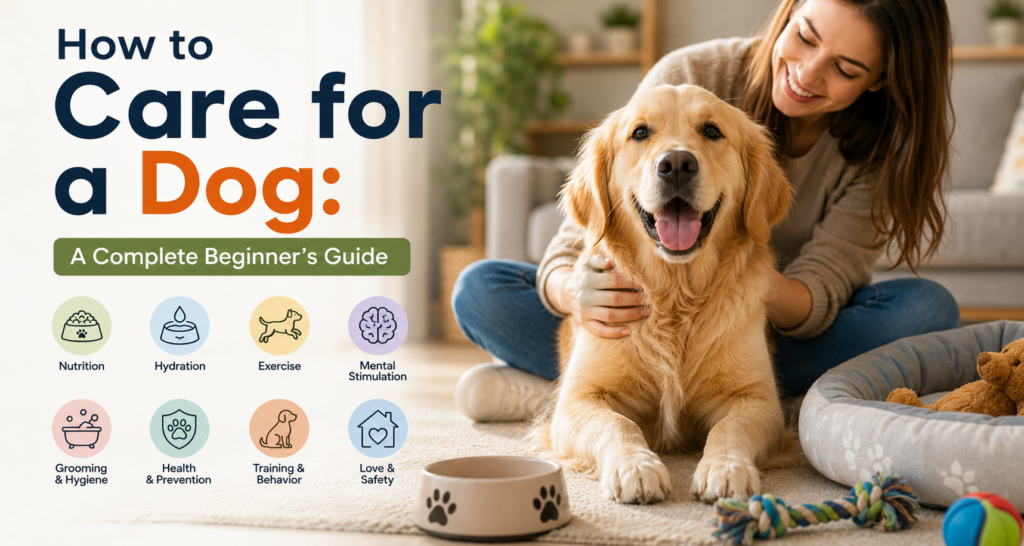
Grooming is not only about keeping your dog looking clean. It can also help you notice changes in their skin, coat, paws, ears, or nails.
Bathing
How often a dog needs a bath depends on factors such as coat type, lifestyle, skin condition, and how dirty they become.
Use products specifically designed for dogs unless your veterinarian recommends otherwise.
Avoid assuming that frequent bathing is always better. Excessive bathing can be inappropriate for some dogs.
Brushing
Regular brushing can help:
- Remove loose hair
- Reduce mats and tangles
- Keep the coat in better condition
- Reduce shedding around the home
- Give you an opportunity to check the skin
The appropriate brushing routine varies considerably between coat types.
Dental Care
Dental hygiene deserves regular attention.
Plaque and tartar can contribute to dental disease, which is common in dogs. Ask your veterinarian about an appropriate dental-care routine for your dog.
Nail Care
Overgrown nails can become uncomfortable and may affect the way a dog walks.
If you are uncomfortable trimming your dog’s nails yourself, a veterinarian or qualified groomer can help.
Ear Care
Some dogs are more prone to ear problems than others.
Check the ears regularly for unusual odor, redness, discharge, swelling, or signs of discomfort. Avoid inserting objects deeply into the ear canal.
If something looks abnormal, consult your veterinarian rather than trying to diagnose the problem yourself.
Paw Care
Your dog’s paws encounter many different surfaces every day.
Check them periodically for:
- Cuts
- Cracks
- Foreign objects
- Irritation
- Swelling
Be especially cautious with very hot surfaces and extreme weather conditions.
Dog Health and Preventive Care
Preventive care is one of the most important responsibilities of a dog owner.
Vaccinations
Vaccinations help protect dogs against important infectious diseases.
The appropriate vaccination schedule depends on factors such as age, lifestyle, location, previous vaccination history, and individual risk.
Your veterinarian can create an appropriate vaccination plan for your dog.
Flea, Tick, and Parasite Prevention
Dogs can be exposed to parasites through their environment and other animals.
Depending on where you live and your dog’s lifestyle, your veterinarian may recommend prevention for:
- Fleas
- Ticks
- Intestinal parasites
- Heartworm and other regionally relevant parasites
Do not choose medications solely based on internet recommendations. Products and appropriate dosing can depend on the dog’s species, weight, age, health, and local parasite risks.
Veterinary Checkups
A dog can appear healthy while still developing a health problem.
Regular veterinary examinations can help identify issues earlier and provide an opportunity to discuss:
- Nutrition
- Weight
- Vaccinations
- Dental health
- Parasite prevention
- Behavior
- Exercise
- Age-related changes
When Should You Contact a Veterinarian?
Not every unusual behavior is an emergency, but sudden or severe changes should not be ignored.
Contact a veterinarian when you notice concerning symptoms such as:
- Difficulty breathing
- Collapse or loss of consciousness
- Seizures
- Significant bleeding
- Severe or persistent vomiting
- Severe or persistent diarrhea
- Significant pain
- Sudden extreme weakness
- Major changes in behavior
- Suspected poisoning
- Ingestion of a potentially dangerous object or substance
When an animal’s condition appears serious or rapidly worsening, seek professional veterinary care promptly.
How to Care for a Puppy
Puppies require additional attention because they are still developing physically and behaviorally.
Puppy Nutrition
Puppies generally require food formulated for growth, with the exact nutritional needs depending on their size and developmental stage.
Follow appropriate feeding guidance and discuss your puppy’s diet with your veterinarian if you are unsure.
Vaccination and Preventive Care
Young puppies have specific preventive healthcare needs. Your veterinarian can advise you about vaccinations, parasite prevention, examinations, and other care appropriate for your puppy.
Socialization
Early experiences can influence how puppies respond to people, animals, environments, sounds, handling, and new situations.
Socialization should be gradual, positive, and appropriate for the puppy’s age, health, and vaccination status.
House Training
House training requires consistency and supervision.
Take your puppy to an appropriate bathroom area regularly, especially after:
- Waking up
- Eating
- Drinking
- Playing
- Sleeping
Reward desirable behavior rather than relying on punishment.
Puppy Biting
Mouthing and biting are common puppy behaviors.
Redirect your puppy toward appropriate toys and avoid turning hands into play objects. Consistent training and appropriate mental and physical stimulation can help.
How to Create a Good Routine for Your Dog
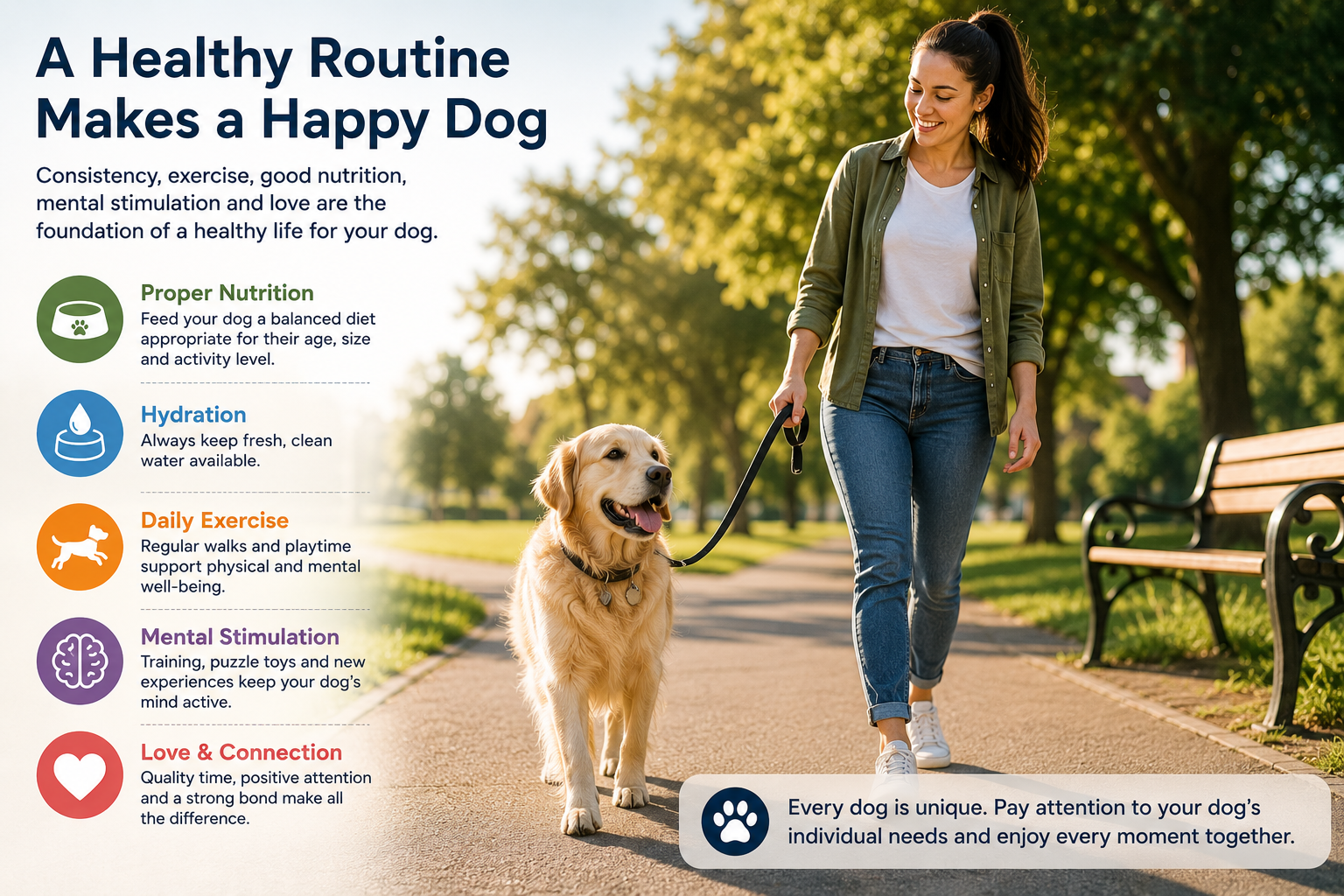
A useful routine should include several basic elements:
Food → bathroom opportunities → activity → mental stimulation → interaction → rest
The exact timing will depend on your dog.
For example:
| Part of the day | Possible activities |
|---|---|
| Morning | Bathroom break, meal, walk or activity |
| Midday | Rest, water, bathroom break, enrichment |
| Afternoon | Play, training, interaction |
| Evening | Meal, activity, calm interaction, bathroom break |
| Night | Quiet rest and sleep |
The goal is not to follow the clock perfectly. The goal is to create predictable patterns that help your dog understand what to expect.
How to Make Your Home Safe for a Dog
Dogs are naturally curious, and many household items can become dangerous if they are within reach.
Before bringing a dog home, look around your house from the dog’s perspective.
Pay particular attention to:
- Human medications
- Cleaning products
- Electrical cords
- Small objects that could be swallowed
- Trash
- Certain plants
- Human foods that may be harmful to dogs
- Open balconies or unsafe windows
- Accessible chemicals
- Sharp objects
Keep potentially dangerous items secured and supervise dogs when they are exploring unfamiliar environments.
If you suspect your dog has eaten something potentially toxic, contact a veterinary professional or appropriate animal poison service rather than waiting for symptoms to appear.
Caring for a Dog Also Means Understanding Behavior
Good dog ownership is not only about physical needs.
Behavior can communicate that something is happening.
For example, excessive barking, destructive behavior, or difficulty settling may be associated with factors such as:
- Boredom
- Lack of appropriate exercise
- Fear
- Stress
- Separation-related problems
- Insufficient training
- Environmental changes
Punishing a behavior without understanding its cause may not solve the underlying problem.
Positive, consistent training is generally a better starting point than relying on fear or punishment.
For persistent or severe behavioral problems, consider working with a qualified veterinary behavior professional or appropriately credentialed positive-reinforcement trainer.
What Should You Buy for a Dog?
You do not need to buy everything available in a pet store.
Start with the essentials.
Basic Dog Supplies Checklist
- Food appropriate for your dog’s life stage
- Food and water bowls
- Comfortable bed
- Collar or harness
- Leash
- Identification tag
- Appropriate toys
- Grooming supplies
- Waste bags
- Appropriate cleaning supplies
- Safe transportation solution when needed
Depending on your dog’s circumstances, you may also need items such as a crate, baby gates, training pads, a coat for appropriate weather conditions, or specialized grooming equipment.
The best product is not necessarily the most expensive one. Look for products that are appropriate for your dog’s size, behavior, lifestyle, and safety needs.
A Practical Checklist for Your Dog’s First Week
If you are bringing a dog home for the first time, use this as a starting point.
Before Your Dog Arrives
- Prepare a safe resting area
- Buy appropriate food
- Set up food and water bowls
- Prepare a collar or harness and leash
- Get identification
- Remove potentially dangerous objects
- Prepare appropriate toys
- Have basic grooming supplies available
- Plan where your dog will sleep
- Identify a veterinary clinic
The First Day
- Give your dog time to explore gradually
- Provide fresh water
- Follow the appropriate feeding plan
- Allow plenty of rest
- Keep the environment calm
- Supervise interactions with children and other pets
- Avoid overwhelming your dog with too many new experiences
The First Week
- Establish a predictable routine
- Begin appropriate training
- Monitor appetite and behavior
- Arrange veterinary care when appropriate
- Begin building positive experiences
- Observe your dog’s individual preferences and habits
Common Mistakes New Dog Owners Make
Even well-intentioned owners can make mistakes.
1. Feeding Too Much
Overfeeding can contribute to unhealthy weight gain.
Portion recommendations should be considered alongside your dog’s age, activity level, body condition, and individual needs.
2. Focusing Only on Physical Exercise
A dog can be physically tired and still mentally understimulated.
Include training, play, exploration, and enrichment.
3. Ignoring Dental Care
Dental hygiene is easy to overlook, but it should be part of your dog’s overall healthcare routine.
4. Changing Everything at Once
Dogs often benefit from predictable routines. Major changes should be introduced thoughtfully whenever possible.
5. Assuming Every Dog Has the Same Needs
Age, size, health, personality, lifestyle, and breed characteristics can all influence what your dog needs.
6. Waiting Until Something Is Wrong to Think About Veterinary Care
Preventive care is an important part of responsible ownership.
7. Buying Products Without Considering the Individual Dog
A toy, bed, harness, or food that works well for one dog may not be appropriate for another.
How Can You Tell if Your Dog Is Doing Well?
There is no single behavior that proves a dog is healthy, but getting to know your dog’s normal habits can help you notice changes.
Pay attention to:
- Appetite
- Water consumption
- Energy level
- Sleep
- Bathroom habits
- Weight and body condition
- Coat and skin
- Mobility
- Social behavior
- Mood and usual personality
A sudden or persistent change from your dog’s normal pattern is worth discussing with a veterinarian.
Knowing what is normal for your dog is one of the most useful things you can do as an owner.
Frequently Asked Questions About Dog Care
How often should a dog eat?
The appropriate feeding schedule depends on factors such as age, size, health, diet, and individual needs. Puppies often have different feeding requirements from adult and senior dogs. Follow the food’s feeding guidance and your veterinarian’s recommendations.
How much exercise does a dog need every day?
There is no universal number that applies to every dog. Exercise needs depend on age, health, breed characteristics, size, fitness, and personality. Regular activity should be appropriate for the individual dog.
What can dogs eat?
Dogs can eat certain human foods safely, while others can be harmful or toxic. Safe choices and appropriate portions matter. Avoid giving your dog unfamiliar foods without checking whether they are appropriate.
Read next: [What Can Dogs Eat? Safe and Unsafe Foods for Dogs]
Can dogs be left alone at home?
Some dogs can comfortably spend limited periods alone, while others may struggle with separation or boredom. The appropriate amount of alone time depends on the individual dog, age, training, health, and circumstances.
How often should a dog be bathed?
It depends on the dog’s coat, lifestyle, skin health, and how dirty they become. Some dogs require more frequent grooming than others.
How often should a dog visit the veterinarian?
The appropriate schedule depends on age, health, lifestyle, and individual risk. Your veterinarian can recommend an appropriate preventive-care schedule.
What are the most important things a new dog owner should buy?
Start with essentials such as appropriate food, bowls, a comfortable bed, identification, a leash or harness, toys, grooming supplies, and waste bags. Additional products depend on your dog’s specific needs.
What is the most important thing when caring for a dog?
Consistency.
A dog needs appropriate nutrition, healthcare, exercise, mental stimulation, safety, training, social interaction, and rest. Understanding your individual dog’s needs and maintaining a predictable routine can make everyday care easier for both of you.
Final Thoughts
Learning how to care for a dog does not mean becoming an expert overnight.
The most important step is understanding that your dog’s needs go beyond food and shelter. A healthy life involves appropriate nutrition, exercise, mental stimulation, grooming, preventive healthcare, training, safety, companionship, and regular attention to changes in behavior or health.
Your dog’s needs will also change over time. A puppy, adult dog, and senior dog may require very different routines, while two dogs of the same age and breed can still have different personalities and needs.
Start with the basics, establish a consistent routine, learn your dog’s normal behavior, and work with veterinary professionals when health questions arise.
At PetChoiceGuide, our goal is to make pet ownership easier by providing practical, straightforward guides that help you make better decisions for the animals you care about.
Your dog does not need a perfect owner. They need a responsible, attentive, and consistent one.
Sources & Further Reading
For health, nutrition, vaccination, parasite prevention, and behavioral questions, consult authoritative veterinary and animal-health resources, such as:
- American Veterinary Medical Association (AVMA)
- American Animal Hospital Association (AAHA)
- American College of Veterinary Behaviorists (ACVB)
- Association of American Feed Control Officials (AAFCO)
- World Small Animal Veterinary Association (WSAVA)
- Your local licensed veterinarian
Last updated: August 2026
This article is intended for general educational purposes and is not a substitute for professional veterinary advice. Individual dogs can have different health, nutritional, behavioral, and exercise needs.